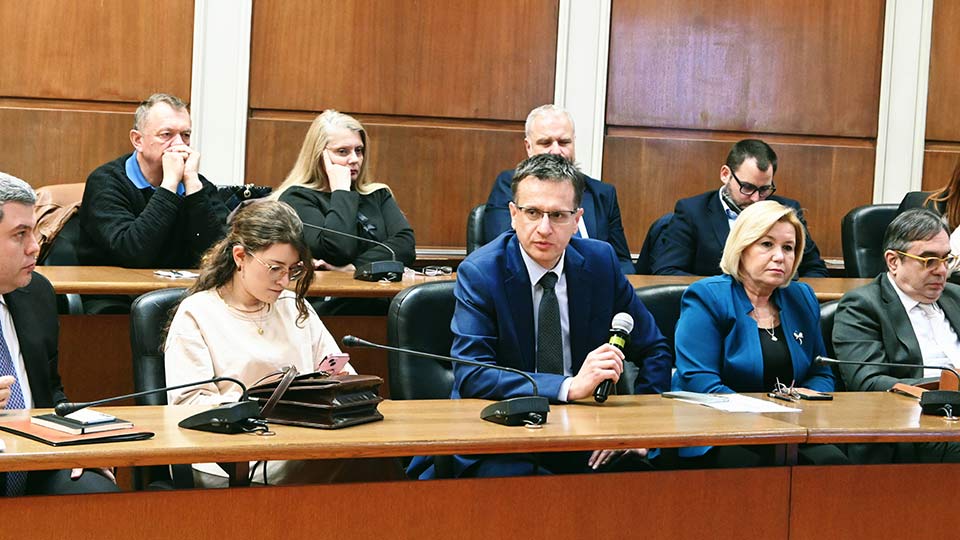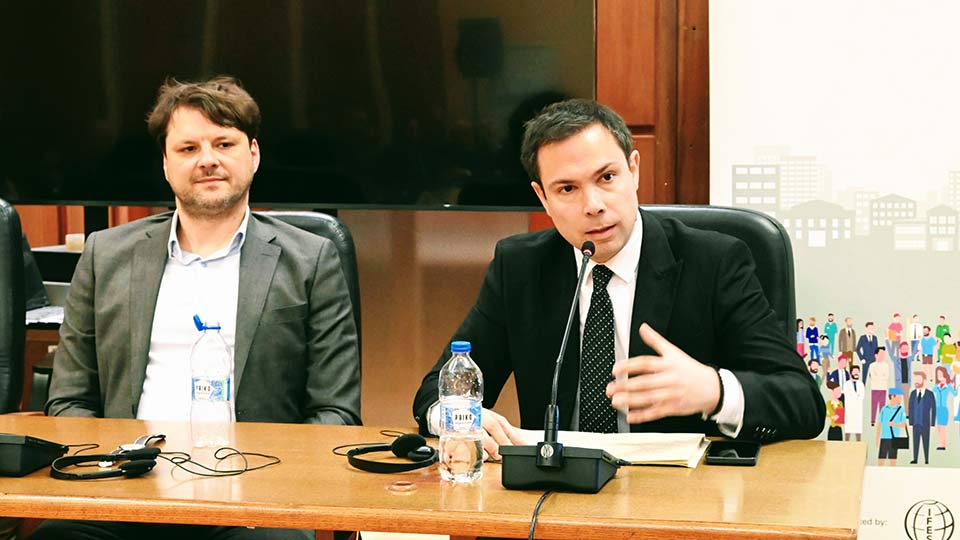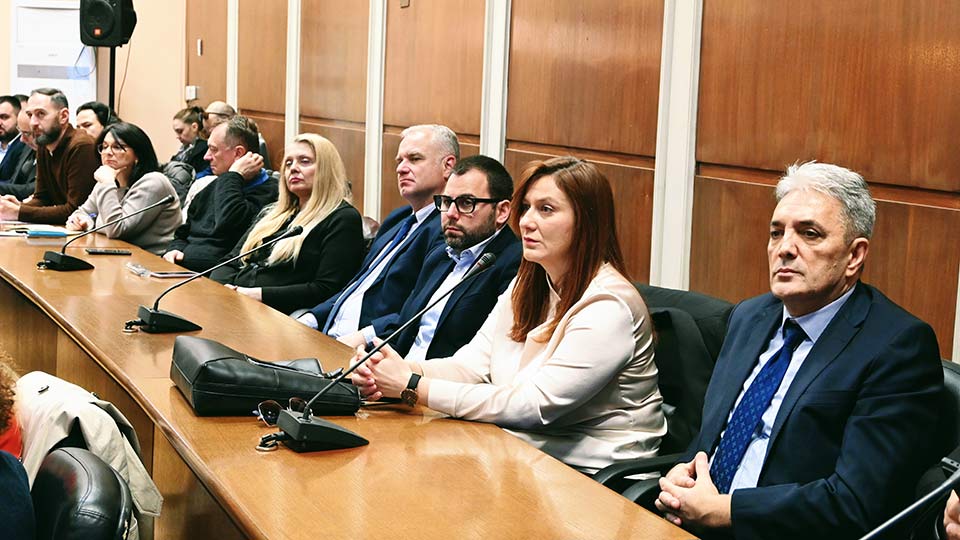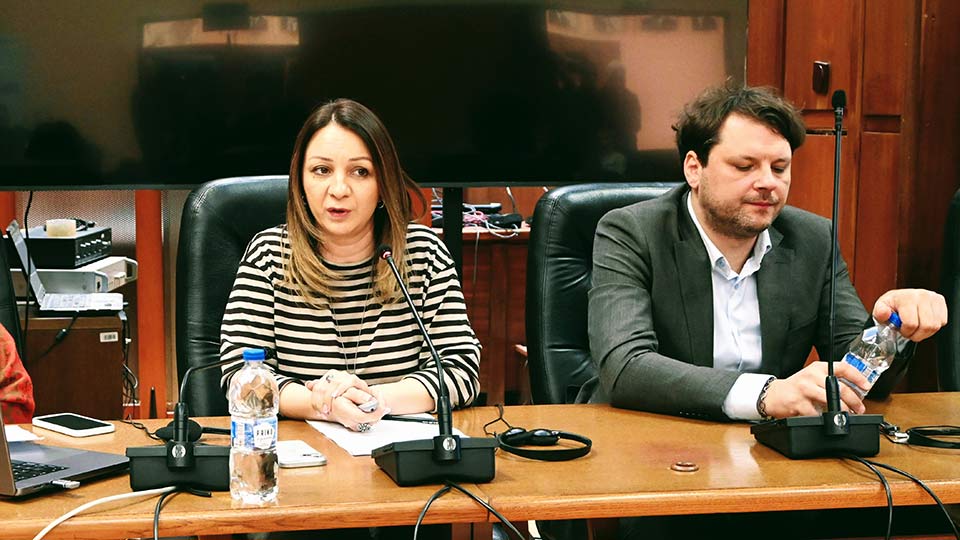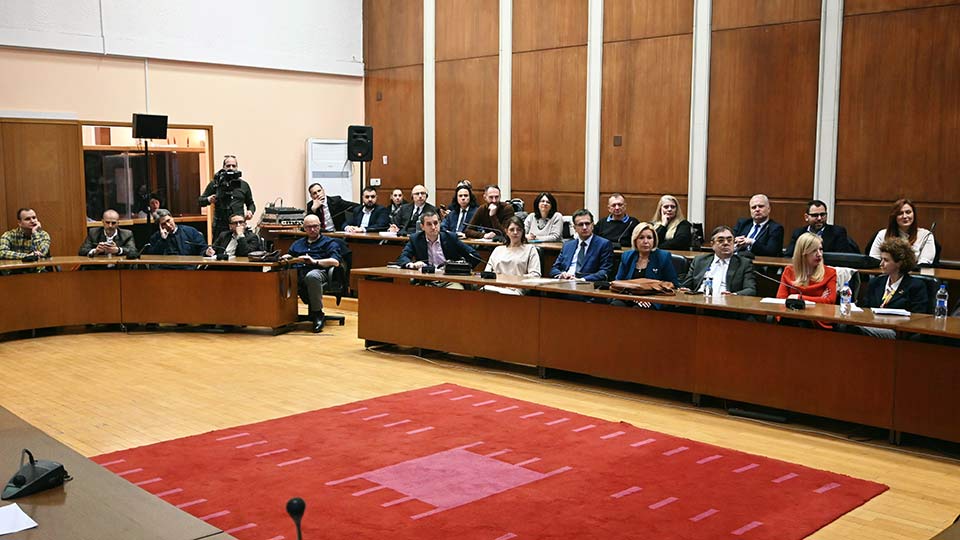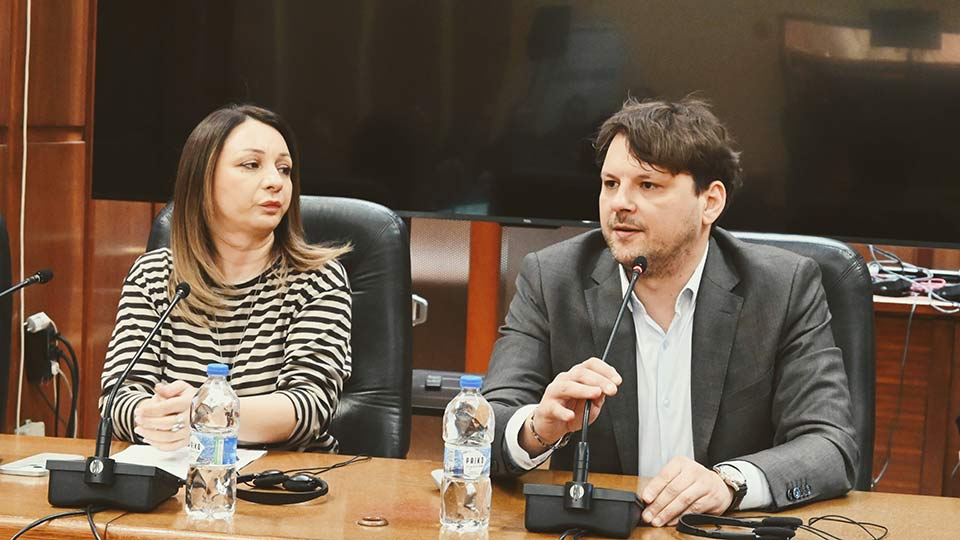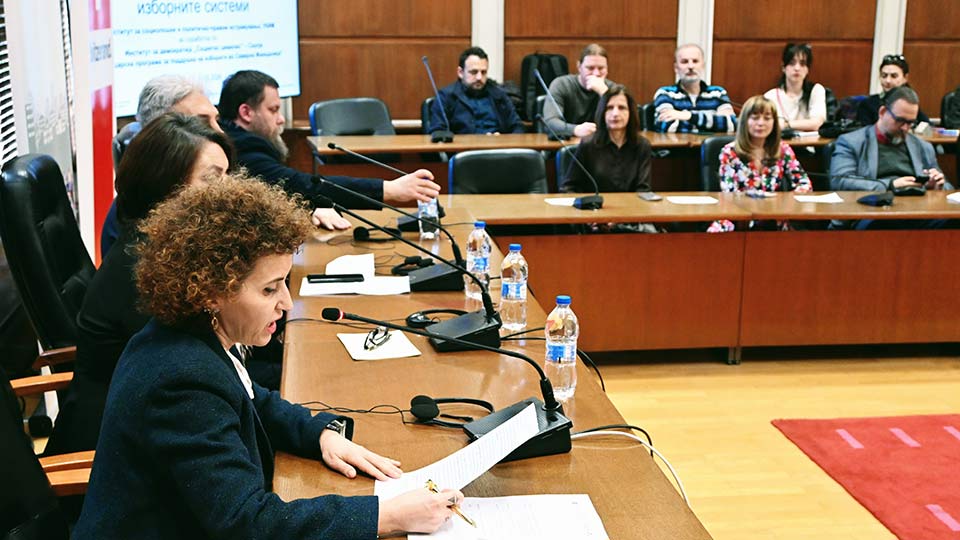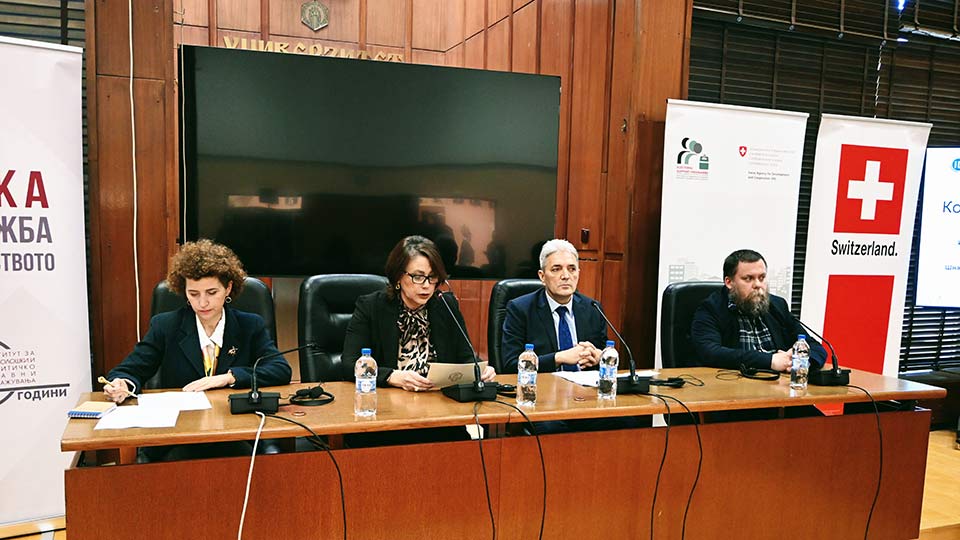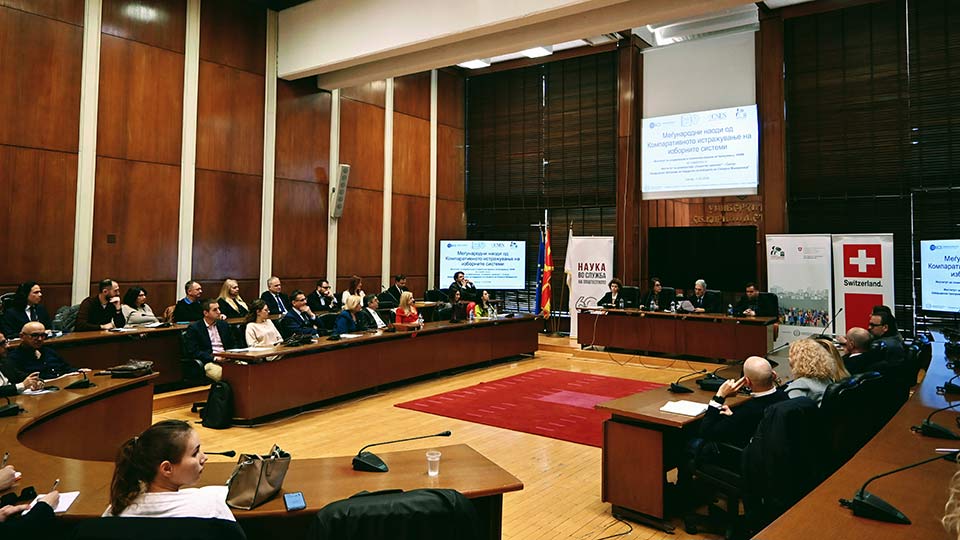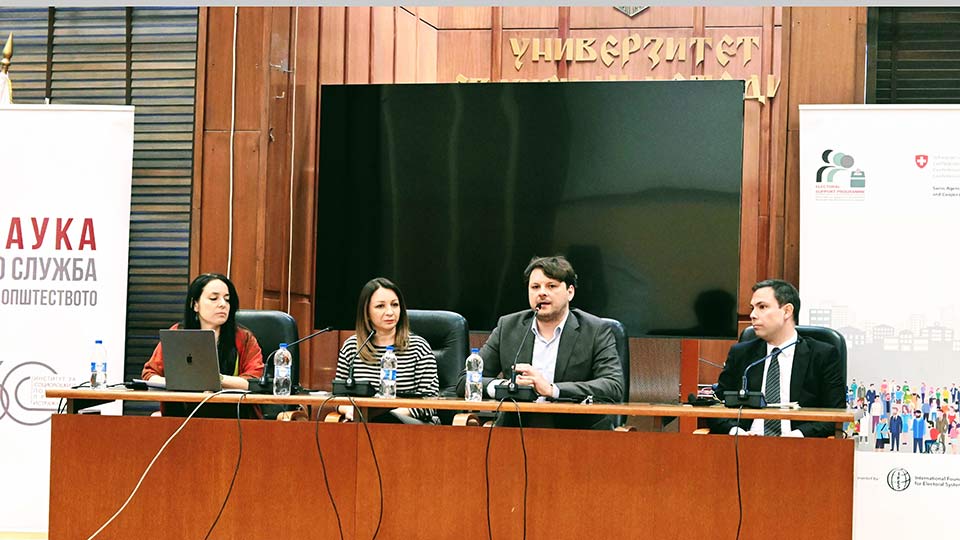
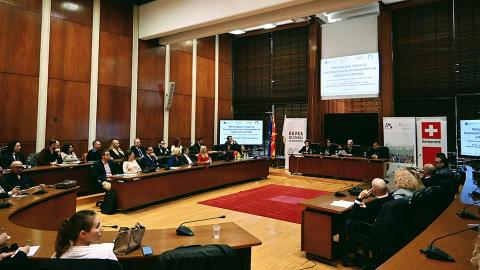
On 11 March 2026, international comparative findings from the Comparative Study of Electoral Systems (CSES) were presented in the Grand Hall of the Rectorate of the University of Ss. Cyril and Methodius in Skopje. The presentations were delivered by political scientists Prof. Aneta Cekikj and Asst. Prof. Jovan Bliznakovski, followed by discussions from Ilina Mangova and Assoc. Prof. Marko Krtolica. Welcome addresses were given by the Rector Prof. Biljana Angelova, the Director of ISPPI Prof. Petar Atanasov, Senior Program Manager and Social Inclusion Specialist at IFES in North Macedonia Afërdita Haxhijaha Imeri, and the Programme Director of IDSCS Misha Popovikj.
The CSES fieldwork was conducted following the 2024 parliamentary elections. The national findings were presented in January 2025, and following the release of the international dataset towards the end of 2025, the international comparative findings are now available for the first time. In the early release of the dataset, alongside N. Macedonia, 16 other countries from Europe, North America, South America, Asia and Oceania are included. The presentation with a visual display of the findings is attached to this press release.
Crisis of parties and representation
-
Although N. Macedonia leads internationally in terms of party membership numbers, citizens show low identification with parties and low affect towards both their most liked and least liked parties.
-
Approximately one third of citizens express negative feelings towards all political parties — placing the country among the most negative in the entire sample.
-
Citizens view the possibility of the country being governed by groups outside of politics — citizens through referendums, independent experts, and business leaders — more positively than citizens of other countries, suggesting a pronounced crisis of representation.
Electoral process, democracy and attitudes
- Citizens rate the electoral process and the electoral offer lower than most countries included in the analysis, perceiving more weaknesses compared to more developed democracies.
- Citizens show lower support for democratic governance than most countries, but at the same time lower support for a strong authoritarian leader.
- Citizens rate both the level of democracy and the implementation of democratic processes low, as well as economic conditions and state capacity (provision of healthcare).
- The country is in the group of countries where a majority of citizens believe that different groups are not treated fairly.
- Citizens are moderate in their support for a constraining role of the courts over the government.
- N. Macedonia is in the top three countries whose citizens position themselves predominantly on the right of the ideological self-placement scale.
Gender and representation
- The majority of citizens consider the percentage of women in the national parliament to be sufficient or too high, although to a moderate extent compared to some other countries.
- The country is among the divided countries on the question of who is better suited to govern in times of crisis — men or women.
- Citizens are moderate in their support for strengthening policies for the representation of women.
Political interest, efficacy and information
-
Citizens have a comparatively low level of interest in politics, low internal political efficacy — self-confidence to participate in politics — and low external efficacy, i.e. confidence that their voice can change something.
-
Citizens are comparatively less informed about the electoral campaign. In one week during the campaign, citizens on average follow news across all types of media just over two days per week.
About CSES
The Comparative Study of Electoral Systems (CSES) is an international academic project that conducts post-election surveys in dozens of countries around the world. The study in N. Macedonia was conducted by the Institute for Sociological, Political and Juridical Research (ISPPI), the Institute for Democracy "Societas Civilis" — Skopje (IDSCS), and the International Foundation for Electoral Systems (IFES), with support from the American National Science Foundation (NSF). The data are publicly available and free to use for research purposes.
Attached: Presentation — International findings from the Comparative Study of Electoral Systems.
Access to data: cses.org.
Photos by: Milena Atanasoska Manasieva (IDSCS)